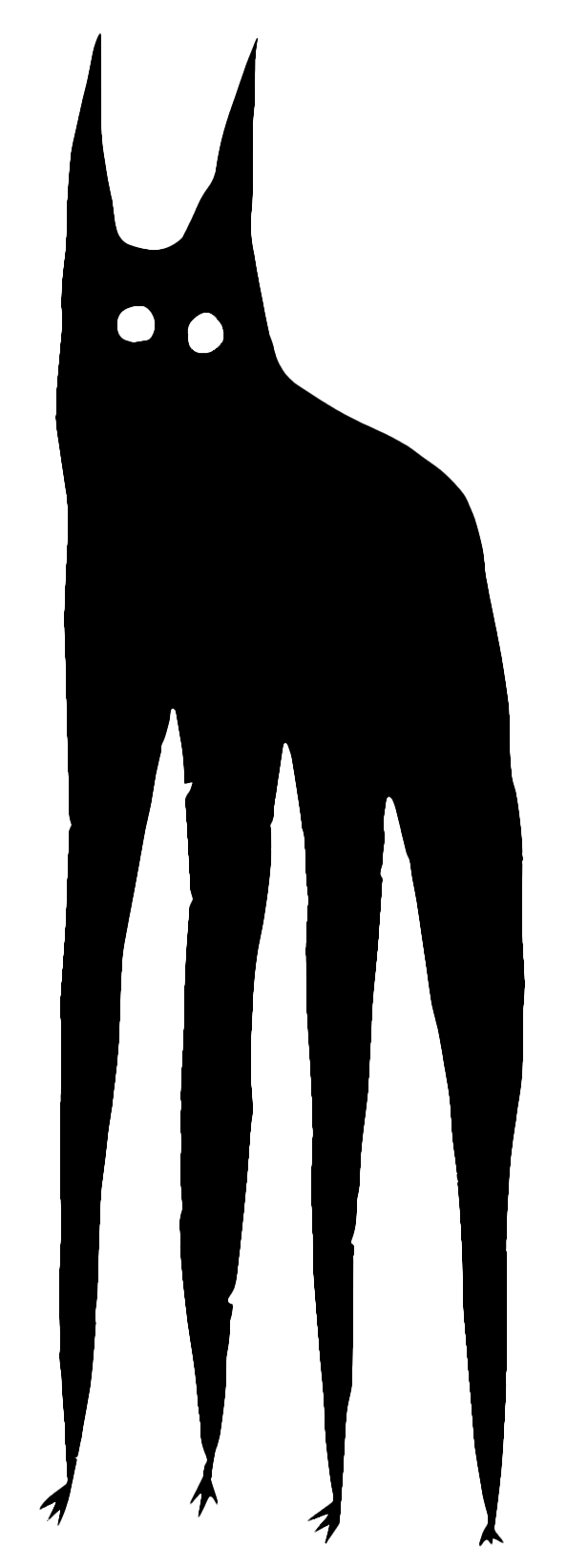

Picture four monsters sharing a tub of Jiffy Pop over an open flame—that dangerous, beautiful moment when you're not sure if you're about to get perfectly popped kernels or a kitchen fire, but you're committed to finding out together. That's what happens when these four get in a room: controlled chaos, collaborative combustion, and the kind of musical conversation that happens when everyone's holding the pan handle at once.
The beauty of monster jazz is nobody's trying to be polite. There's no "after you" at the bridge, no gentle suggestions about dynamics, no passive-aggressive eye contact about tempo. Just four players who've spent enough time in the trenches to know that the best music happens when you stop being precious about your ideas and start treating the bandstand like a shared kitchen experiment. Some nights you get gourmet. Some nights you get scorched. Most nights you get something in between that tastes better than it has any right to, served with the kind of chemistry that only comes from musicians who trust each other enough to occasionally make terrible decisions together.
Featuring
**Jay Sanders** grew up in Nashville, which means he grew up understanding that music is labor — that behind every song on the radio is a session player who showed up on time, read the chart, and made someone else's vision real. But the Nashville that shaped Sanders wasn't the one on Broadway. It was the one in practice rooms and living rooms where Reggie Wooten talked about fundamental vibration and sacred geometry and the Music of the Spheres, where the instrument became a doorway into something older and stranger than the music business. Later, in Knoxville, Sanders spent extended time with Samurai Celestial, the former Sun Ra drummer, absorbing a cosmology in which sound is not entertainment but architecture — a way of organizing the invisible. These weren't lessons in technique. They were lessons in what music is for. He moved to Asheville in 1996 and almost immediately began building. He co-founded the Snake Oil Medicine Show with Jason Krekel and Andy Pond — a band that has spent nearly three decades defying classification, equal parts rolling art party and persistent meditation on the nature of human connection. He joined Acoustic Syndicate in 1997, stepping into the bass chair alongside three members of the McMurry family and staying for a quarter century as the band became a foundational force in progressive acoustic music, playing Bonnaroo and Farm Aid and touring the country more times than anyone kept count. He played bass for Donna the Buffalo. He co-led the E.Normus Trio, whose debut drew All About Jazz comparisons to John Zorn's Naked City — fuzzed-out psycho guitar licks counterbalanced by softly woven innocence, the kind of music that refuses to stay in one room. Along the way, he played with Ornette Coleman, Béla Fleck, Fred Wesley, Sam Bush, Bernie Worrell, Big Chief Monk Boudreaux, and Kirk Joseph. He composed for the ETHEL string quartet. He scored independent films. He studied with Jerry Coker and Jeff Sipe. He played guitar and bass across 47 states and six countries. And then, in 2024, he released *Evanescent* — his solo debut, seven original compositions and a tone poem dedicated to the Voyager spacecraft, performed by an eight-person ensemble featuring Justin Ray, Jacob Rodriguez, Casey Driessen, and other longtime Asheville collaborators. The German press called it a work of astonishing range. It is the sound of a musician who has spent decades absorbing everything and is finally letting it all speak at once. When Hurricane Helene struck the mountains in 2025, Sanders responded the way a composer responds — he wrote *Sinfonietta Helene*, his first symphonic work, which premiered with the Blue Ridge Orchestra. The piece was shaped by collective grief and collective resilience, an offering made from the same impulse that has driven his entire career: the conviction that music exists not to decorate life but to help people survive it. Sanders co-owns Little Jumbo, which USA Today named one of the Best Bars in America for 2025. He curates the Monday night jazz series that brings musicians from across the region into a room on Broadway Street where the art on the walls doesn't quite make sense and the listening is close. He leads a quartet every Tuesday with Will Boyd, Zack Page, and Alan Hall. He organized Asheville's inaugural Improvisational Music Festival and serves on the board of URSA Asheville, a non-profit dedicated to musical innovation. He is building a "Live at Little Jumbo" recording series. He is, in other words, doing exactly what he has always done — constructing rooms where music can happen, and then standing inside them with his guitar, making sure it does.
The house in Orangeburg, South Carolina, was a frequency spectrum unto itself. The Isley Brothers and the Manhattan Transfer and Dolly Parton and Mozart — all of it moving through the same rooms, all of it landing in the ears of a kid from Queens, New York, who had been transplanted to the Lowcountry and was trying to figure out which signal to lock onto. His mother had graduated from Jamaica High School of the Performing Arts, and she made sure Will and his siblings sang. Gospel was the foundation — Yolanda Adams, the Clark Sisters — but Aretha Franklin and James Brown and Prince were never far from the turntable. Then one day he watched Gerald Albright's video on a Johnny Gill single, and the saxophone chose him the way weather chooses a landscape: completely, irreversibly, with no interest in negotiation. Boyd was playing in professional R&B bands before he turned eighteen. He enrolled at South Carolina State University, where the jazz ensemble's alumni roll reads like a dispatch from the center of American music — Houston Person, Ron Westray from Lincoln Center, Charlton Singleton of Ranky Tanky, baritone man Johnny Williams from the Count Basie Orchestra. He marched in the Marching 101. He earned a BA in Music Business. He was inducted into the university's jazz hall of fame in 1997. And he met Kelle Jolly, a vocalist and music educator who would become his wife, his musical partner, and eventually the host of WUOT's *Jazz Jam* radio show and the founder of the Knoxville Women in Jazz Jam Festival. They married at a jazz festival in Japan, which tells you everything you need to know about how music and life operate in the Boyd household. After Columbia, South Carolina — where he worked the fusion and funk circuit alongside drummer John Blackwell, who would go on to play for Prince, and trombonist Fred Wesley, the architect of James Brown's horn sound — a chance encounter with saxophonist Patrick Langham pulled Boyd to Knoxville. He enrolled in the University of Tennessee's jazz studies program and found himself studying under three musicians who represented entirely different philosophies of what a horn can do: Jerry Coker, the legendary educator whose Woody Herman credentials and pedagogical texts had shaped generations of improvisers; Zim Ngqawana, the South African free jazz visionary; and Donald Brown, the pianist and composer who had held down the keys in Art Blakey's Jazz Messengers. Coker later called Boyd a modern musician steeped in tradition, which is about as precise a six-word summary as anyone has managed. Brown became Boyd's producer, guiding three albums — *Live at the Red Piano Lounge*, *Freedom Soul Jazz*, and *Soulful Noise* — that document a musician whose soprano, alto, tenor, baritone, bass clarinet, and flute all serve the same central impulse: soul. Not soul as a genre but soul as a method, the conviction that technique without feeling is expensive noise and that the deepest jazz has always kept one foot in the church. His *Freedom Soul Jazz* took the spirituals — "Go Down Moses," "Every Time I Feel the Spirit," "We Shall Overcome" — and gave them the harmonic weight of modern jazz without stripping them of their original devotional power. He played the premiere of *Shadow Light*, an opera celebrating the life of painter Beauford Delaney, with the Marble City Opera. He appeared on the PBS documentary soundtrack for the same painter. He joined the Knoxville Jazz Orchestra. He and Kelle toured Japan multiple times, performed on cruise ships, appeared on national television, staged musical theater productions, and were honored with the MLK Award for the Arts. In 2021, the City of Knoxville proclaimed July 21st "Kelle Jolly and Will Boyd Day." Along the way, the list of musicians who have called on Boyd grew into something that looks less like a résumé and more like a map of modern American music: Leslie Odom Jr., Doc Severinsen, Wycliffe Gordon, Regina Carter, Jeff Coffin, the Four Tops, John Beasley's Monk'estra, the Jimmy Dorsey Orchestra, the Harry James big band. He has appeared on recordings with Nicholas Payton, Chris Potter, Jeremy Pelt, Eric Reed, Russell Gunn. He played Big Ears in Knoxville and Peter Barakan's It's Magic in Tokyo. He added the EWI — the electronic wind instrument — to his arsenal, not as a replacement for the acoustic horns but as an extension of them, another voice in a conversation that keeps expanding. Boyd now teaches at UNC Asheville and Warren Wilson College, directs the Contemporary Jazz Ensemble of Asheville, and performs weekly at Little Jumbo in the Jay Sanders Quartet. He carries multiple instruments to every gig the way some people carry multiple languages — not to show range but because each one says something the others can't. The soprano sax, which he has called the most difficult and sweetest of the reeds, remains the one closest to his center. It is the voice that sounds most like the house in Orangeburg: every frequency at once, all of it moving through the same room, all of it landing exactly where it needs to.
Vic Stafford's drumming résumé reads like a musical travelogue written by someone who can't sit still: Asheville native, Donna The Buffalo anchor, Toubab Krewe founding member, sound engineer, session player, and general rhythmic architect for whoever needs someone who understands that groove isn't just about keeping time—it's about creating the gravitational field that keeps everyone else from flying off into space. After helping build Toubab Krewe's West African-meets-American-rock fusion from the ground up—recording two albums, playing over 2,000 shows, and performing everywhere from Bonnaroo to the Festival in the Desert in Mali—Stafford relocated to Atlanta, where he continues his dual life as both percussive force and sonic craftsman. His transition from Toubab's drum throne to the engineering booth for their Stylo album proves he understands music from both sides of the glass: how to make it and how to capture it without losing the magic in translation. Whether laying down the pocket for Donna The Buffalo's socially conscious folk-rock, sitting in with whoever needs someone who can navigate Cajun, zydeco, reggae, and straight-ahead groove with equal fluency, or engineering sessions that require someone who knows the difference between "technically correct" and "feels right," Stafford represents that rare breed of musician who's equally comfortable behind the kit and behind the board—and knows that sometimes the best contribution is knowing when to play less and let the music breathe.
Ben Bjorlie grew up in a household where the Charlotte Symphony Orchestra wasn't just background music—it was the family business. His mother played cello, his father played bass, and by the time Ben hit fifth grade, he was starting on clarinet, eventually landing spots in the National Honors Band and every all-state ensemble that would have him. Then at 13, he picked up his dad's bass and started learning Stanley Clarke and Marcus Miller tunes by ear, which is the musical equivalent of learning to drive on a Formula One racetrack. Somewhere between high school marching band drum line and his undergraduate percussion degree at Appalachian State, Bjorlie developed a dangerous superpower: complete fluency on both bass and drums, which means he understands rhythm from both sides of the conversation—he's the guy who knows what the bass player needs from the drummer and what the drummer needs from the bass player, because he's spent decades being both people. Since moving to Asheville in 1998, Bjorlie has become one of those musicians other musicians call when they need someone who can play literally anything—funk, bebop, Latin, swing, big band, salsa—with the kind of taste and sensitivity that comes from actually listening instead of just executing. For over a decade, he's been the house bassist at Asheville Music Hall's Tuesday funk jam and the house drummer at Barley's Thursday jazz jam, which is code for "he's logged more stage hours than most people log sleep hours." He's played with the Asheville Horns, Bayou Diesel, Orange Krush, Nuevo Montuno Salsa Orchestra, David Zoll Trio, Asheville Jazz Orchestra, Spork!, and countless other projects that needed someone who could read the room, read the chart, and make everyone else sound better. And when he's not performing, he's teaching the next generation at Asheville Music School—because apparently being proficient on bass, drums, AND guitar while maintaining dual careers as an educator and working musician isn't enough of a challenge.
Admission
FREE!

